


Posted in Electrical
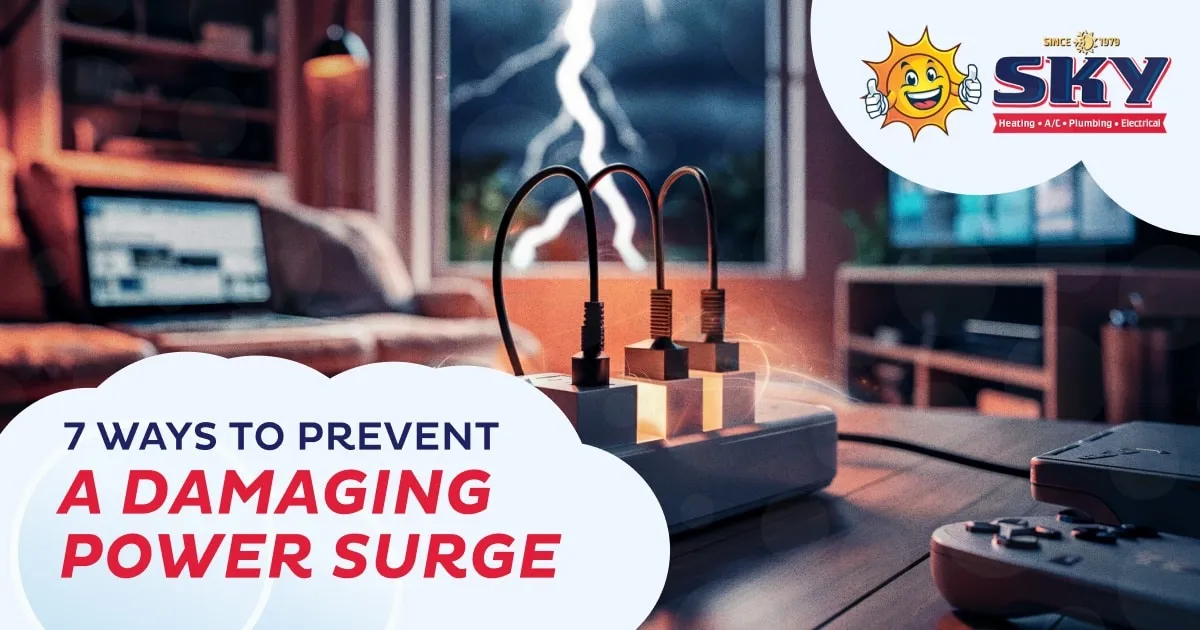
Power surges can cause major damage to appliances and electronics, but they can be prevented. They may be small spikes you’re not aware of. However, these can do significant harm over time. Larger surges can cause sudden power failures and even home fires. From unplugging devices during a storm to having an electrical services contractor install a whole home surge protector, you can protect your family and home from these momentary yet dangerous events.
What Does It Mean to Have a Power Surge?
Your home electrical system normally operates at 120 volts. However, alternating current fluctuates and can normally peak at up to 169 volts. Anything higher than that is considered a surge. Spikes in AC power can happen anywhere, anytime.
Power surges may last for as little as a millionth of a second but be strong enough to cause an arc inside an electrical device. This can overheat components such as circuit boards. Smaller surges can occur just by turning on appliances. The damage adds up gradually until an electrical device suddenly stops working.
There are many causes of power surges, such as the following:
- Lightning Strikes: Lightning can trigger the most powerful electrical surges, which cause instantaneous damage and severe injuries to anyone nearby.
- Damaged Power Line: If a power line is blown over in a storm or knocked down in an impact, a break in transmission cables can cause a power surge in your home. A buildup of snow and ice can also cause electricity levels to fluctuate.
- Faulty Wiring: A power surge can be caused by old, frayed, cracked, or improperly installed wiring. Surges also occur if rodents chew through wiring insulation.
- Appliances: Some appliances, like air conditioners and refrigerators, normally turn on and off. This causes momentary increases in demand that cause electrical fluctuations.
- High Power Demand: Using a hairdryer or other high-power appliance can increase voltages to unsafe levels. Higher demand on the power supply, such as on a hot day when more ACs are running, can cause brownouts or blackouts that trigger voltage dips and spikes.
How to Prevent a Power Surge
You can’t stop every voltage spike. Power outages on the electrical grid, surges when power is restored, and lightning strikes are out of your control. However, you can protect your home and minimize the risk with the following preventative measures:
- Unplug Electronics During a Storm
- Turn Off Everything During an Outage
- Install Energy-Efficient Appliances
- Plug Appliances Into Dedicated Outlets
- Use Surge Protectors with Larger Electronic Devices/span>
- Install a Whole-Home Surge Protection System
- Schedule a Home Wiring Inspection
How to Prevent a Power Surge
You can’t stop every voltage spike. Power outages on the electrical grid, surges when power is restored, and lightning strikes are out of your control. However, you can protect your home and minimize the risk with the following preventative measures:
1. Unplug Electronics During a Storm
If a strong storm is approaching, disconnect electrical devices from the power supply to protect them from surges. This is the best way to prevent damage to televisions, computers, and large appliances. Even if lightning doesn’t strike close to your home, disruptions in electricity from the power grid can damage anything that’s still connected.
After a storm, you should do the following to prevent additional damage:
- Reset any electrical devices that aren’t working.
- Check devices and outlets for signs of damage, such as burn marks.
- Inspect your HVAC unit for evidence of damage.
2. Turn Off Everything During an Outage
A power surge is almost inevitable as the utility company restores power. It may seem surprising that all the lights are out one second, and the next, your home is jolted by high-voltage electricity. One reason is everything turns back on at once. The more electronics unplugged or turned off, the less the demand as the initial surge of electricity reaches your home. Therefore, shut off all electrical devices and appliances during a blackout, including your air conditioner.
3. Install Energy-Efficient Appliances
Newer appliances are often advertised as high-efficiency. Manufacturers and dealers love to promote the idea that an expensive, high-end unit will lower your electricity bills. Modern air conditioners, refrigerators, and washer-dryers are designed to meet new efficiency standards, so they draw less electricity. This means they’re also more resistant to power surges, so you can save on both energy and frequent repairs.
4. Plug Appliances Into Dedicated Outlets
How you manage your outlets can prevent power surge damage. Plugging too many devices into one outlet can cause an overload. Distributing the load can prevent a surge in the first place. Large appliances such as refrigerators and HVAC units should not share an outlet with other devices.
The safest solution is to have an electrician install a dedicated circuit and breaker for each large appliance. This avoids exceeding each circuit’s rated capacity. It can also prevent voltage fluctuations due to overheated lines.
5. Use Surge Protectors with Larger Electronic Devices
A surge protector is effective at preventing damage from internal voltage spikes. Although not designed to handle the intensity of a lightning strike, it can protect an expensive appliance or electronic system from a power surge, and possibly save you thousands of dollars in replacing a home entertainment system or an HVAC unit.
6. Install a Whole-Home Surge Protection System
Small plug-in surge protectors protect only one device. A whole-home surge protector is a heavy-duty system that protects every device and circuit from external surges. The system is connected to your main electrical panel. Providing a barrier between the power grid and your home electrical system, it blocks any surge from reaching outlets, appliances, and electronics within your house, no matter where they are.
7. Schedule a Home Wiring Inspection
A wiring inspection is a good idea if you live in an older home or your electrical system hasn’t been evaluated in a few years. Wiring can deteriorate or become outdated over time. Once it falls into disrepair, it can cause or contribute to surges. Devices can suddenly fail and you can even get electrocuted when your main breaker is off.
An inspection allows an electrical contractor to identify faulty wiring or wiring that doesn’t meet the latest electrical codes. They may be able to make updates or repairs. If necessary, they can replace damaged or old wiring to improve electrical capacity and safety.
Frequently Asked Questions
What Appliances and Devices Are Most Susceptible to Damage from a Power Surge?
Aside from ACs and refrigerators, the following can be damaged by voltage spikes:
- Televisions
- Stoves
- Microwave ovens
- Dishwashing machines
- Washers and dryers
- Home security systems
- Anything that uses a microprocessor
What Is a Transient Voltage Surge Suppressor?
A Transient Voltage Surge Suppressor (TVSS) also protects against spikes in electrical current. Hardwired to a wall outlet, it protects whatever is plugged in. Depending on the model, a TVSS may even warn of surges with noise or a flashing light.
Is a Power Strip a Surge Protector?
Only a power strip labeled to provide surge protection does so. Otherwise, it’s not a surge protector, although it may look like one. Nonetheless, a power strip plugs into an outlet and adds more outlets to plug devices into. It may have a circuit breaker that turns off all its outlets.
Low-cost models generally don’t protect against power surges. Higher-cost units have built-in surge protection electronics. They also list a joules rating on the exterior and may have a light to indicate surge protection is active.
Can I Combine Point-of-Use and Whole Home Surge Protectors?
You can install a surge protection system at the electrical service entry point and still use outlet surge protectors. The whole-house system covers incoming electrical, telephone, cable TV, and satellite dish lines. Or, an individual protector can be installed for each one. Using surge protection power strips simultaneously provides an extra line of defense for appliances and electronics. A direct lightning strike can still overwhelm these defenses, but a two-tier surge protection system is effective against most surge events.
Contact Sky Heating & Air Conditioning
We’re known for high-quality electrical services in the Portland area. Fully licensed, trained, and equipped, our electricians can protect your home against power surges with prompt repairs and by installing a whole home surge protector. We also provide wiring and rewiring work, electrical inspections, generator installation, and electrical panel replacement. If you’re experiencing frequent power surges or are concerned about the risk, call (503) 563-2698 today.