


Posted in Air Conditioning
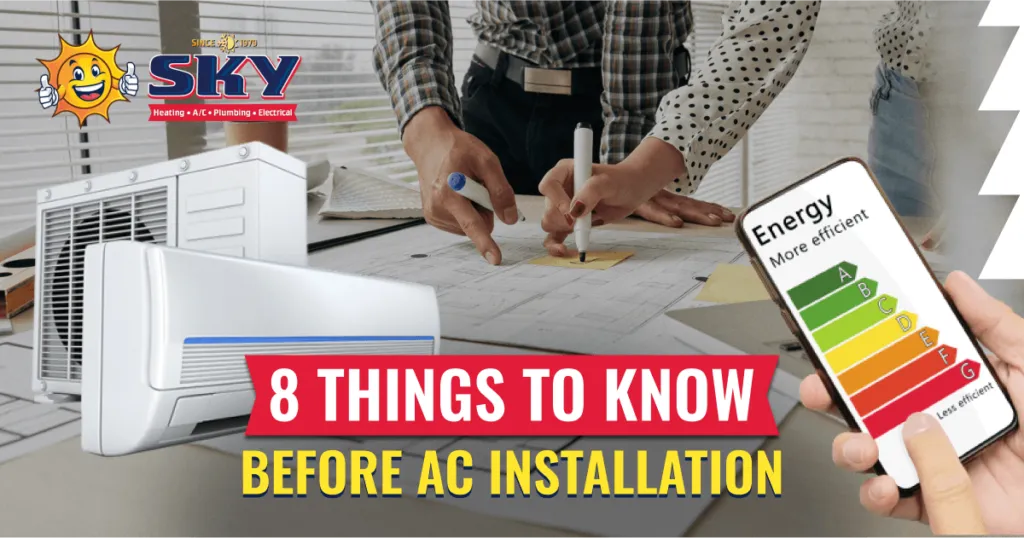
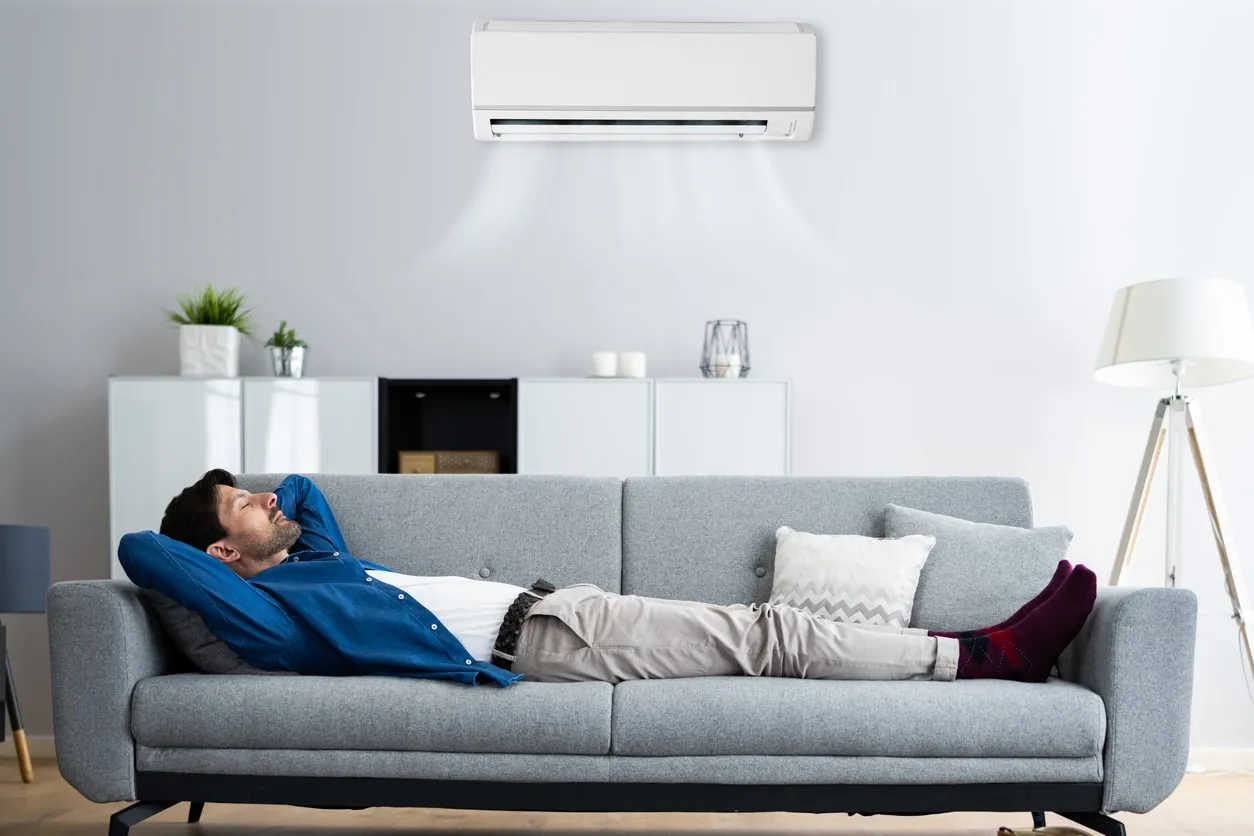
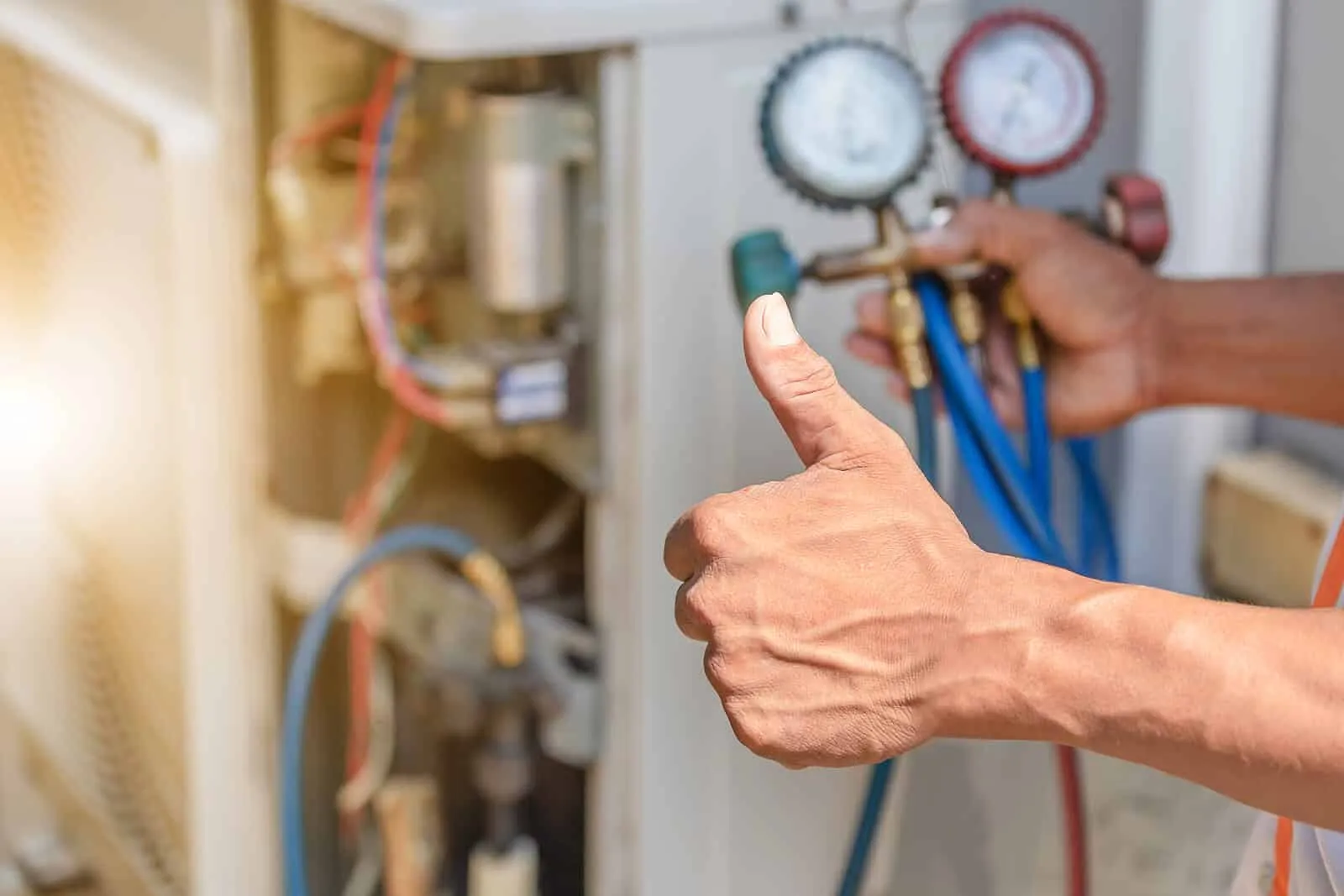
Air conditioning is essential for any home or business. It provides a wide range of benefits, including comfort, humidity control, and improved indoor air quality. But AC installation is far from a simple process. At Sky Heating & Air Conditioning, we are professionals when it comes to AC repair and replacement, but there are a few things you must know for your investment to pay off.
1. There Are Many Types to Choose From
Central air conditioning can be installed as a split system. It comprises an outdoor condenser unit, an indoor air handler, and an evaporator coil. A package system contains all three in the same housing. It can be installed on the roof or the ground. Other options include ductless mini splits suited for smaller homes without ductwork. Even smaller solutions include window ACs and portable ACs for when cooling is needed for a limited area.
2. ACs Come In Different Sizes
Most air conditioners have similar dimensions. But it’s not the physical size of an AC that determines its capacity. Cooling capacity is measured in British Thermal Units (BTUs) and tons (an AC removes about 12,000 BTUs of air per hour, per ton).
The more BTUs an AC system has, the more square footage it can cool. A 3- to 3.5-ton unit suits a typical 2,000-square-foot house. Climate, the number of windows and doors in a home, the quality of insulation, and the number of occupants in your household also help determine the best-sized HVAC system.
3. Energy Efficiency Is a Requirement
The U.S. Department of Energy continues to update energy efficiency requirements. As of 2023, all residential AC systems in the northern U.S. must be at least 14 SEER; in the southern U.S., they must be rated at least 15 SEER. The more efficient an HVAC system is, the more it costs. However, many states offer incentive programs that let people save on AC installation. The energy savings can be substantial as heating and cooling costs account for nearly half of your electric bill.
4. Ductwork Isn’t a Necessity
Installing or replacing ductwork can add thousands of dollars to a project. And as ducts get older, they become more prone to leaks. Your energy bills will be much higher if 20% or 30% of the conditioned air in your ducts is leaking. Ductless air conditioning systems avoid efficiency and other issues associated with ductwork. They also let you set up multiple zones, so you can control the temperature of different rooms, floors, or areas separately.
5. AC Installation Costs Depend on The Time of Year
During the summer, air conditioners are in high demand, so prices will be higher. You’ll also find higher prices in the spring as people start to think about their cooling needs. But in the winter, most people aren’t thinking about their AC. Correctly timing your purchase can help save 10%, 20%, or more. Winter purchases save homeowners money in the south, while mild conditions up north in the fall and spring prompt many HVAC companies to offer discounts to keep their employees busy.
6. Don’t Forget the Air Filter
Your AC system may come with a basic filter. But is it enough to meet all your indoor air quality needs? Not every AC filter is the same. A simple fiberglass filter has a limited surface area; it allows more airflow but doesn’t catch as many particles as, for example, a MERV 12 media filter. Some high-efficiency filters capture tiny dust particles, pollen, smoke, and even bacteria and some viruses.
7. The Noise Level Affects Your Well-Being
You may not think about the noise level when buying an AC. But it’s an important consideration. High levels of background noise can be constantly distracting. Ideally, an AC should produce less than 50 dB of noise. By comparison, a whisper is about 20 dB, an alarm clock is 60 dB, and an ambulance siren is 120 dB.
8. Inverter Technology Can Help You Save
A traditional compressor is either off or runs at full power. Two-stage systems can run at a high or low level. But an inverter-driven AC compressor can run at incremental speeds to adjust precisely to demand. Compared to an all-or-nothing system, it can save you up to 50% in energy consumption because, at any given time, it may only need to operate at 40%, 60%, or 80% of full capacity.
Call Sky for AC Installation Help
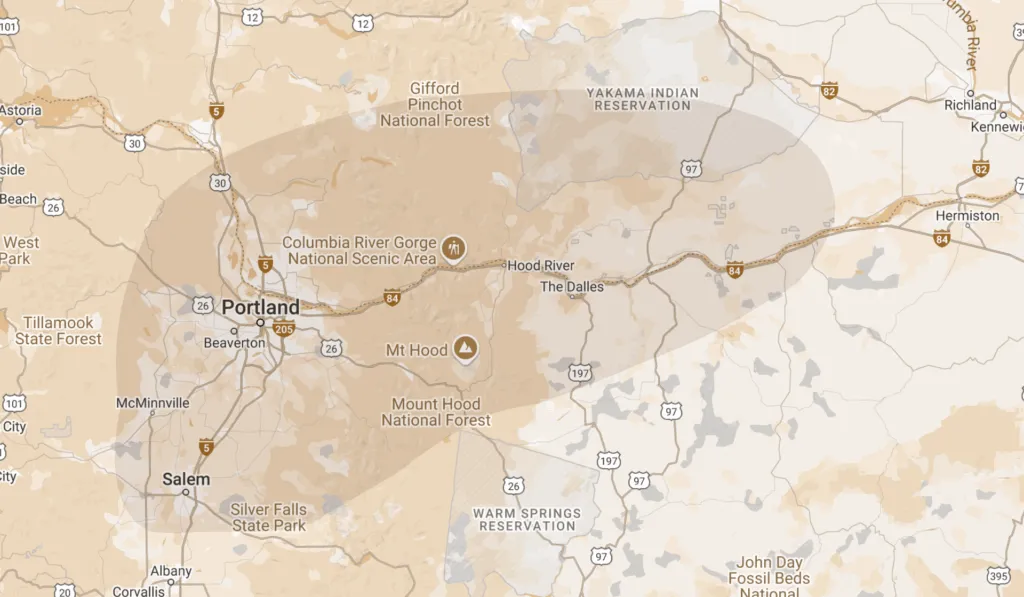
At Sky Heating & Air Conditioning, we specialize in installing all types of heating and cooling systems. Portland area customers depend on us to install air conditioners, furnaces, heat pumps, and ductless systems. We also provide indoor air quality solutions. To learn more about what we offer and our specials, maintenance plans, and financing, call (503) 563-2698 today.