
Electrical
Electrical in Hillsboro
- Electrical panels
- Lighting installation
- EV charger installation
- Generators
Hillsboro, OR · Since 1979
Licensed techs for heating, cooling, plumbing, and electrical in Hillsboro. Available 24/7.


Tell us how we can help. Or call (844) 659-8611.
Sky’s Hillsboro pages call out Washington County water (Tualatin Valley Water District) and older neighborhoods like Reedville, Downtown Hillsboro, and Brookwood. We handle plumbing, HVAC, and electrical across that mix of historic and newer homes.
Hillsboro’s a growing city. Now home to over 111,000 residents, our city holds a unique mix of real estate. Shute Park and Downtown historic homes; rapid new expansions like South Hillsboro; the master-planned communities near Orenco Station. All of them add to the signature style and feel of ‘Silicon Forest.’ And all of them are dealing with their own unique electrical setups. Some homeowners are dealing with outdated panels, others are upgrading their homes to handle a brand new Level 2 EV charger.
The electrical panel’s where everything using power traces back to in your home. While the homes that give the area its character and charm are what makes Hillsboro what it is, they’re often operating with panels under 100 amps, often not getting updates for decades. That just doesn’t gel with our modern life, especially in a forward-thinking (and forward-moving) town like Hillsboro.
Sky Heating, AC, Plumbing & Electrical has served the Portland area since 1979. We’re licensed (CCB# 245538 | SKYHEHA7635N), family-owned, and available open 24 hrs. mon - sun.
 What we do here
 HVAC, plumbing, and electrical — the same list we run across the Portland area, dispatched for Hillsboro, OR.
 Electrical in Hillsboro
 From service panels to lighting and EV chargers, Sky electricians work in Hillsboro every week.
We are proud to have earned an A+ rating and accreditation from the Better Business Bureau thanks to our impeccable business practices.
Our crew is ready to be there for you when you need us most. 24/7 emergency service is available to all customers in need of immediate help.
While a furnace that won’t stop may signal a technical issue, setting the fan to “ON” at the thermostat may be best practice, depending on your furnace. Newer models are designed to stay on day and night.
Why should you run your HVAC fan continuously? The following are some of the hidden benefits.
One of the biggest benefits of HVAC fans is proper air circulation. Heated and cooled air doesn’t always circulate properly because heat rises and pushes cold air to your house’s lower areas while making upper floors and attics very warm. Running the fan evens out temperatures throughout all spaces in your home, circulating warm and cool air for more even — and faster — residential heating and cooling.
The Dalles, Portland, and the Tualatin area are famous for their rainy, temperate climate. Mold and mildew can flourish in these conditions without good airflow. Better air circulation greatly reduces the chances of these contaminants growing in the walls, cracks, and crevices of your home.
With new HVAC systems, keeping the fan on actually improves energy efficiency. HVAC fan settings in newer models make automatic adjustments, keeping the temperature in your home even, which, in turn, reduces the amount of time your furnace or air conditioner needs to stay on to maintain your ideal temperature.
Energy Star rated furnaces and air conditioners are more likely to save you money on your energy bills while running 24/7, and they reduce greenhouse gas emissions and the demand for importing energy.
Better air circulation in your home benefits people with allergies, pets, and respiratory conditions because the air in your house makes more passes through the system’s filters, catching any allergens, bacteria, viruses, pollen, mold spores, dust, and other airborne particles.
You might have to change the filters more often if you run the HVAC system constantly, but you will also enjoy higher-quality indoor air.
Contrary to popular belief, keeping your HVAC fan on may extend its service life, provided the equipment was properly installed and your ductwork is correctly sized. Set to off, a newer, energy-efficient HVAC system goes through more wear and requires more maintenance than if the fan is set to the “on” position.
Your HVAC system’s only job is to keep you comfortable. With the fan set to the “on” position, your home’s interior will have consistently fresh, conditioned air at your desired temperature without you having to monitor the thermostat or manually adjust the temperature.
You’ll also get a more even temperature distribution, especially if your house has more than one floor. In the hot Oregon summers, your entire space will stay cool. In the chilly winters, you won’t have to worry about cold spots in the house.
There are a few reasons you should not keep your HVAC fan running continuously. For example, if your ductwork is in the attic, the summer heat can make running the fan impractical. Temperatures well above 100°F can end up blowing down into your main living space. It also won’t help if your ductwork is leaking. Make sure to have your ducts tested and sealed occasionally so your HVAC system is as efficient as it’s designed to be.
Another consideration is the age of your HVAC system. If you’re concerned about constant fan use and energy consumption, it could be a good idea to install a more efficient motor. Older furnaces tend to use permanent split capacitor (PSC) type motors. However, a new, more efficient electronically commutated motor (ECM) can cut energy use despite running more often.
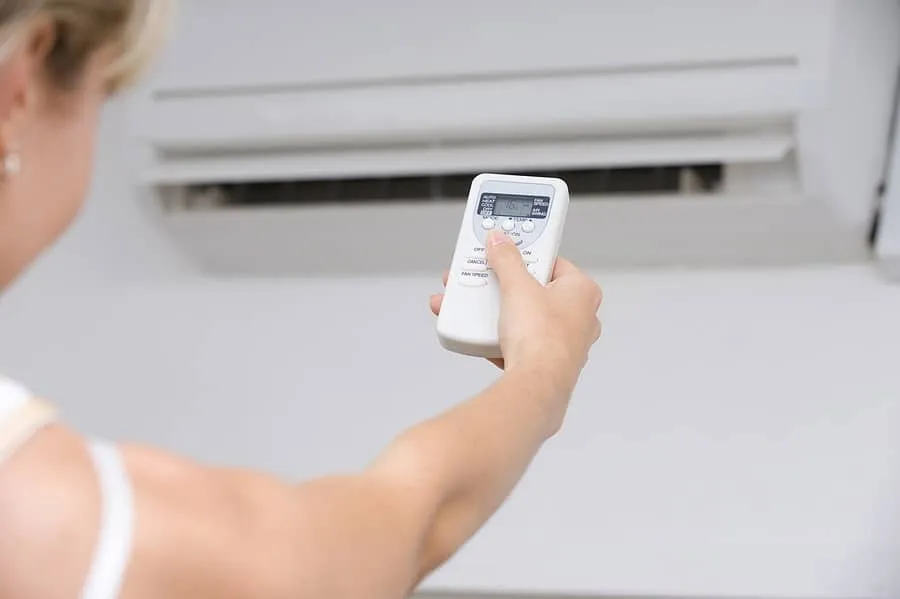
While each HVAC system is built differently, setting your fan to run continuously through the thermostat should be fairly easy. The “on” setting keeps the fan running even after the air reaches your desired temperature. Select this setting rather than the “automatic” setting, and the system will actively push the already-conditioned air around in your house 24/7, keeping it evenly heated or cooled with clean, filtered air year-round.
If you’re unsure how to change your HVAC system’s fan settings and live in Portland, the Dalles, Troutdale, Lake Oswego, Tigard, Rivergrove, Milwaukie, or the surrounding area, reach out to Sky today. A qualified technician will inspect your system to ensure it’s ready to be set to “on” and then show you how to do it.
You deserve to have an HVAC system that works its best year-round. If your heating and cooling isn’t keeping you comfortable, call Sky Heating, AC, Plumbing, and Electrical today. An experienced local HVAC technician will assess the issue and help you improve your system.
We’re your local home service center, offering a wide range of HVAC services, including AC, furnace, and ductwork inspections, installations, replacement, maintenance, and more. We employ the expertise, tools, and equipment to get the job done right to make sure your system offers the comfort, efficiency, and air quality you need. We care about providing a quality experience to each of our clients and will do what it takes to make sure you’re happy with the work we do.If you’re considering changing how you run your HVAC system, contact our team today to schedule a consultation appointment. Count on our expert technicians to provide trustworthy advice. Schedule service using our easy online form, or call us directly at (503) 563-2698.
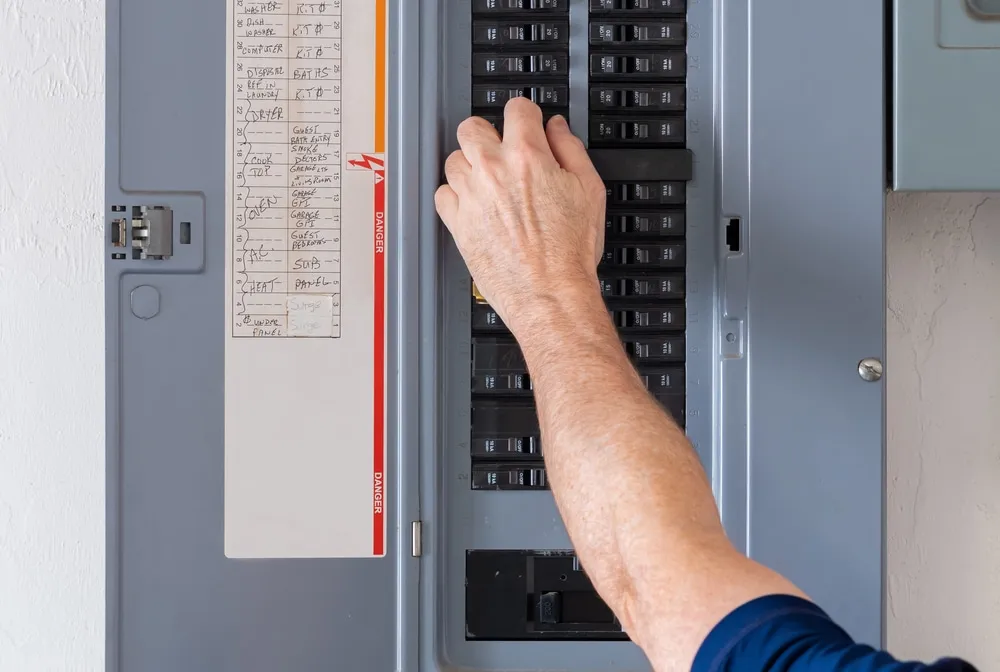
You might need an electrical panel upgrade if the circuit breakers trip frequently, the panel emits a burning smell, or it looks worn, rusted, or damaged. A common reason to replace the panel is to boost capacity and add amperage to support an increased load. The project also often includes replacing outdated or worn-out wiring, so it has many benefits.
In general, here’s what electrical panel replacement looks like:
A trench inspector determines the project requirements and obtains approval before digging a trench, which will contain the underground feeder conduit. The trench is then re-inspected and backfilled. Sidewalk, street, or driveway repairs are completed as necessary.
Once the installation is complete, repairs to stucco/siding, waterproofing, and painting are completed. A final inspection is then scheduled to ensure your electrical panel upgrade complies with NEC standards.
Only if you have years of training and experience and an electrician’s license can you replace an electrical panel. It’s one of the most challenging electrical jobs. The reasons you need a professional include:
The electrical service panel was designed to provide the different areas of your home with adequate power supply safely and securely. The external source through which the service panel distributes the power is your local power provider. The goal is to spread a sufficient amount of electricity to branch circuits. Branch circuits feed the outlets and switches of different rooms and home appliances with electricity. The fuses and circuit breakers protect your appliances, wiring, electronic devices, and even residents from circuit damage. Damage usually happens when devices receive an excessive amount of electrical current from overloading a circuit, improper use, or a short course.
During the early 1900s to 1950s, the commonly used service supplied to the homes was 30 amps. To protect the branch circuits, these fused panels were composed of two plug fuses. They also possessed a knife blade switch which was used to disconnect the power from the whole board and so the house. A ceramic fuse holder, typically mounted within a black metal enclosure, was used to install the fuses. Only 120 volts of electricity were supplied by a 30-amp panel, which considerably failed for powering our modern household appliances such as computers, electronics, and other devices. Homes with these electrical panels must be upgraded to 100 AMP circuit breaker panels to meet the modern-day power requirements.
The 60-amp fuse panel became a widespread sensation in the early 1950s and 1960s. Mounted inside a gray metal cabinet, this fused panel featured a 240-volt feed. It possessed two cartridge fuse blockers. One of them was used as the main and held 60 amp fuses. The second fuse blocker was used as an appliance feed and held 30 amps. Its function was to power those appliances that required a high amount of electricity to operate, such as a water heater, electric dryer, etc.
It consists of four plug fuses as well, whose purpose was to serve four branch circuits. The energy supply from these electrical panels was sufficient for considerably small powerhouses, but in larger houses that may have more than four branch circuits, the 60-amp fuse panel was not enough.
At last, in the mid-1960s, the circuit breakers entered the game of electrical panels and been standard ever since. The reason circuit breakers were such an important advancement is that they came with the advantage of reset after any fault occurs, unlike fuses that needed to be replaced when tripped. They include both 120 and 240-volt circuits with a total amperage of 100 amps. The prominent traits of a circuit breaker panel are the main breaker and two rows of circuit breakers that operate for the branch circuits.
Normally many circuit breaker panels have 100-amp service, but a 200-amp breaker panel is required as the standard for many new homes or old houses with updated wiring. A 200-amp breaker panel tends to support more branch circuits and can provide electrical capacity two times greater than a 100-amp panel. By installing a 200-amp breaker panel in your newly bought house or the renovated one, you can free yourself from major power issues.
With every passing time, the energy requirement in a normal household is increasing day by day. Consumers now want to adopt different ways to control and minimize their usage. Modern problems require modern solutions. For this reason Span, founded by ex-tesla engineer Arch Rao, has become a leader in electrical panel innovations. Arch Rao pointed out that many EV owners and solar customers need to upgrade their old electrical panels to accommodate these new advancements. Rao found a way to convert this panel into an intelligent and app-controlled energy gateway. The newly found company aims to bind the solar users with a battery capture system.
In a recent announcement, Span shared the news about its smaller but more versatile unit, the “span smart panel”. The span smart panel is said to be better and more efficient than its predecessor.
The system shows great efficacy with most home electrical breakers. It enables the customers to monitor and control the circuits through a connected mobile app. With a smart panel you can power critical loads by switching the room nodes. It also supports Ethernet, Wi-Fi, cellular and Bluetooth connections.
The smart panel is designed to interpret the power draw from the entire house and every connected device inside. Alongside interpretation, it can also evaluate the data coming from the solar output and the status of battery storage in homes.
An electrical service panel ages alongside your house. After a specific period, it will need new installation or upgrade. It might look like an easy job to do from the outside, but certain precautions must be taken; otherwise, you can get yourself in danger. For this reason, we advise you to leave the work to the professionals.
Here at sky heating, we have the most experienced electricians in Portland. Call (503) 563-2698 today and book our services today!
You will incur some costs throughout the life of your water heater. However, it’s possible to save with the following preventive measures:
Assuming you’ve taken good care of your water heater, but its warranty has expired, you may still have options. Your home warranty may cover water heater service depending on the plan level. Check the policy to see if it provides opportunities to save.
Another way to save is to get at least three quotes. Talk to at least three contractors and compare their rates, reputations, and timelines. Know exactly what you’re getting for the price. Therefore, you can choose the best service at the most reasonable rate (rather than automatically picking the lowest bid).
Replacing any water heater part requires knowledge of how it works. For example, a thermocouple isn’t hard to replace, but you must understand how it’s connected (and how to turn off the gas). Replacing a heater element on an electric model doesn’t cost much, but you’ll also need a continuity tester and know how to use it to determine if the element and electrical connections are working properly.
An experienced professional eliminates any uncertainties and can help you save on the cost of water heater repairs, maintenance, and replacement.
Sky Heating & Air Conditioning provides high-quality water heater services in Portland and surrounding areas. Whether your water heater requires maintenance, repairs, or replacement, our licensed professionals get the job done right. They are available 24/7 to help in an emergency. However, our maintenance plans include services that can avoid unexpected repairs, while special offers and financing can also help you save. To learn more or schedule water heater and other plumbing services, call (503) 563-2698 today.
Whether you need HVAC, plumbing, or electrical help, our licensed experts are ready. Tell us about your project and we will guide you through the next steps.
Portland, OR & surrounding areas
Ready to get started? Our team will follow up within 24 hours.
Get Started Or call us at (844) 659-8611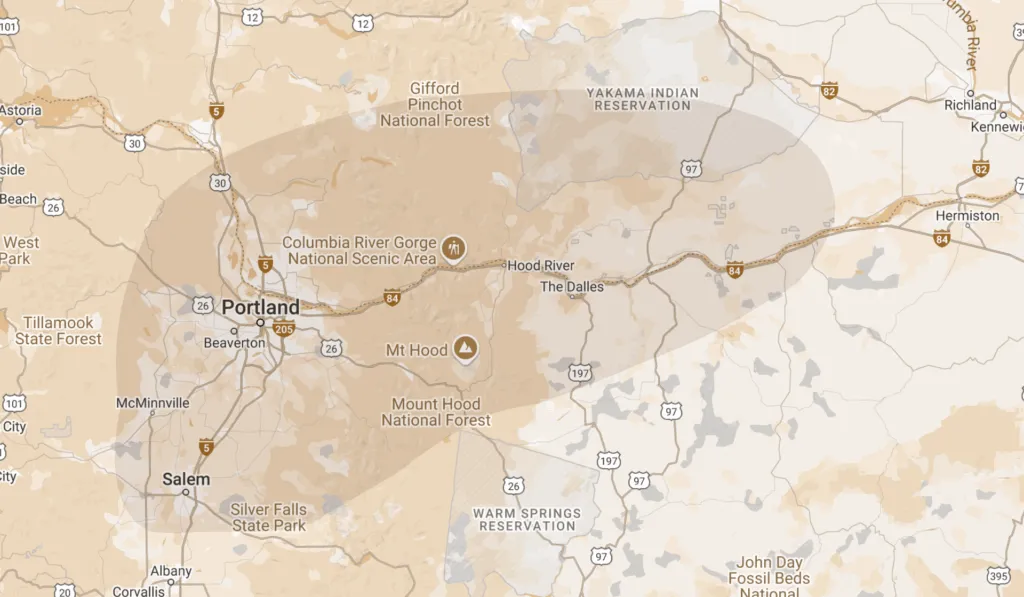
Portland, The Dalles, and communities across North Oregon and Southwest Washington. See every city we serve