Tigard, OR · Since 1979

HVAC, Plumbing & Electrical in Tigard, OR

Licensed techs for heating, cooling, plumbing, and electrical in Tigard. Available 24/7.

Best of the Rose City 2024 Winner Best of the Gorge 2023 Winner

Let's Get In Touch

Tell us how we can help. Or call (503) 563-2698.

Thank You!

Your request is in. We'll contact you within 24 hours to schedule your service.

HVAC, Plumbing & Electrical in Tigard, OR

Tigard is minutes from Sky’s Tualatin location at 19305 SW Teton Ave, Tualatin, OR 97062. We cover heating, cooling, plumbing, and electrical for Tigard homes.

Sky Heating, AC, Plumbing & Electrical has served the Portland area since 1979. We’re licensed (CCB# 245538 | SKYHEHA7635N), family-owned, and available open 24 hrs. mon - sun.

Sky location: 19305 SW Teton Ave, Tualatin, OR 97062

Every Sky service in Tigard

HVAC, plumbing, and electrical — the same list we run across the Portland area, dispatched for Tigard, OR.

Heating & Cooling

HVAC in Tigard

  • AC repair and replacement
  • Furnace repair and replacement
  • Heat pumps
  • Ductless mini-splits
  • Ductwork and duct sealing
  • Indoor air quality
  • Thermostats
  • Geothermal
View services
Plumbing

Plumbing in Tigard

  • Drain cleaning
  • Water heater repair and replacement
  • Tankless water heaters
  • Repiping
  • Toilet installation
  • Garbage disposals
  • Water treatment
View services
1979 Serving Portland Since
150+ Years of Combined Experience
24/7 Emergency Service Available

Your neighbors already call Sky

Local and ready

Sky Heating, AC, Plumbing & Electrical serves Tigard with the same 24/7 crew Portland families have trusted since 1979.

Decades of Experience

With over 40 years of hands-on experience, our team has the in-depth knowledge needed to provide expert plumbing, electrical, and HVAC services in Portland, OR.

A+ Rating From BBB

We are proud to have earned an A+ rating and accreditation from the Better Business Bureau thanks to our impeccable business practices.

Answers from our FAQ pages

How Does a Mini Split Unit Work?

Comprising an outdoor compressor unit and one or multiple indoor air handlers, a ductless heat pump moves warm air from one place to another. A multi-zone system can consist of several air handlers, installed in individual rooms; this is suited for larger homes or buildings or those with multiple floors. However, you can install a single-zone system in a small home or one with an open-concept layout.

Evaporation and condensation are used to transfer heat via a refrigerant. The compressor pump cycles the refrigerant through the system. In a ductless heat pump, one heat exchanger coil condenses the refrigerant and another coil evaporates it. During evaporation, refrigerant absorbs heat from the surrounding environment, while condensing releases heat that was previously absorbed by the substance. The movement of heat between these coils allows the system to maintain a desired temperature.

Ductless heat pumps are easily retrofitted into buildings without ductwork. It’s much easier to install a mini split in a tight space than to make room for ductwork or perform an extensive renovation to accommodate it. Mini splits can also be installed as supplemental systems in homes with central A/C systems to, for example, serve a home addition or finished basement.

Other benefits include:

The size of your home, ceiling heights, window number and size, and the number of people living in the building determine the capacity of the unit, and how many, you need. The capacity of a mini split heat pump is rated in British Thermal Units (BTUs). The larger your home or the room served, the more BTUs that are required to achieve the desired temperature.

You can view the efficiency rating of each product on the Energy Guide label. For cold climates, look for higher heating season performance factors. But in a warmer climate, check the seasonal energy efficiency ratio (SEER) to see what you can save.

  • Energy efficiency, thanks to the lack of ducts that can lose both large amounts of air and energy.
  • The ability to customize temperatures in each room where an indoor air handler installed.
  • Longevity, with many systems lasting 15-20 years with regular maintenance.
  • A relatively quick return on investment; efficiency savings can make up for the high cost of installation.
  • Units available in different sizes, capacities, and designs to meet your functional and aesthetic needs.

Read more

Why Run Your HVAC Fan Continuously?

While a furnace that won’t stop may signal a technical issue, setting the fan to “ON” at the thermostat may be best practice, depending on your furnace. Newer models are designed to stay on day and night.

Why should you run your HVAC fan continuously? The following are some of the hidden benefits.

One of the biggest benefits of HVAC fans is proper air circulation. Heated and cooled air doesn’t always circulate properly because heat rises and pushes cold air to your house’s lower areas while making upper floors and attics very warm. Running the fan evens out temperatures throughout all spaces in your home, circulating warm and cool air for more even — and faster — residential heating and cooling.

The Dalles, Portland, and the Tualatin area are famous for their rainy, temperate climate. Mold and mildew can flourish in these conditions without good airflow. Better air circulation greatly reduces the chances of these contaminants growing in the walls, cracks, and crevices of your home.

With new HVAC systems, keeping the fan on actually improves energy efficiency. HVAC fan settings in newer models make automatic adjustments, keeping the temperature in your home even, which, in turn, reduces the amount of time your furnace or air conditioner needs to stay on to maintain your ideal temperature.

Energy Star rated furnaces and air conditioners are more likely to save you money on your energy bills while running 24/7, and they reduce greenhouse gas emissions and the demand for importing energy.

Better air circulation in your home benefits people with allergies, pets, and respiratory conditions because the air in your house makes more passes through the system’s filters, catching any allergens, bacteria, viruses, pollen, mold spores, dust, and other airborne particles.

You might have to change the filters more often if you run the HVAC system constantly, but you will also enjoy higher-quality indoor air.

Contrary to popular belief, keeping your HVAC fan on may extend its service life, provided the equipment was properly installed and your ductwork is correctly sized. Set to off, a newer, energy-efficient HVAC system goes through more wear and requires more maintenance than if the fan is set to the “on” position.

Your HVAC system’s only job is to keep you comfortable. With the fan set to the “on” position, your home’s interior will have consistently fresh, conditioned air at your desired temperature without you having to monitor the thermostat or manually adjust the temperature.

You’ll also get a more even temperature distribution, especially if your house has more than one floor. In the hot Oregon summers, your entire space will stay cool. In the chilly winters, you won’t have to worry about cold spots in the house.

There are a few reasons you should not keep your HVAC fan running continuously. For example, if your ductwork is in the attic, the summer heat can make running the fan impractical. Temperatures well above 100°F can end up blowing down into your main living space. It also won’t help if your ductwork is leaking. Make sure to have your ducts tested and sealed occasionally so your HVAC system is as efficient as it’s designed to be.

Another consideration is the age of your HVAC system. If you’re concerned about constant fan use and energy consumption, it could be a good idea to install a more efficient motor. Older furnaces tend to use permanent split capacitor (PSC) type motors. However, a new, more efficient electronically commutated motor (ECM) can cut energy use despite running more often.

While each HVAC system is built differently, setting your fan to run continuously through the thermostat should be fairly easy. The “on” setting keeps the fan running even after the air reaches your desired temperature. Select this setting rather than the “automatic” setting, and the system will actively push the already-conditioned air around in your house 24/7, keeping it evenly heated or cooled with clean, filtered air year-round.

If you’re unsure how to change your HVAC system’s fan settings and live in Portland, the Dalles, Troutdale, Lake Oswego, Tigard, Rivergrove, Milwaukie, or the surrounding area, reach out to Sky today. A qualified technician will inspect your system to ensure it’s ready to be set to “on” and then show you how to do it.

You deserve to have an HVAC system that works its best year-round. If your heating and cooling isn’t keeping you comfortable, call Sky Heating, AC, Plumbing, and Electrical today. An experienced local HVAC technician will assess the issue and help you improve your system.

We’re your local home service center, offering a wide range of HVAC services, including AC, furnace, and ductwork inspections, installations, replacement, maintenance, and more. We employ the expertise, tools, and equipment to get the job done right to make sure your system offers the comfort, efficiency, and air quality you need. We care about providing a quality experience to each of our clients and will do what it takes to make sure you’re happy with the work we do.If you’re considering changing how you run your HVAC system, contact our team today to schedule a consultation appointment. Count on our expert technicians to provide trustworthy advice. Schedule service using our easy online form, or call us directly at (503) 563-2698.


Read more

How Can I Save on Water Heater Service?

You will incur some costs throughout the life of your water heater. However, it’s possible to save with the following preventive measures:

Assuming you’ve taken good care of your water heater, but its warranty has expired, you may still have options. Your home warranty may cover water heater service depending on the plan level. Check the policy to see if it provides opportunities to save.

Another way to save is to get at least three quotes. Talk to at least three contractors and compare their rates, reputations, and timelines. Know exactly what you’re getting for the price. Therefore, you can choose the best service at the most reasonable rate (rather than automatically picking the lowest bid).

  • Have Your Water Heater Serviced Regularly: Preventative maintenance should be performed every year by a professional. It allows a technician to check for developing issues and clean parts of your water heater to reduce wear. Usually, the earlier a problem is detected, the less it costs to fix. Maintenance also helps avoid costly emergency callout fees and maximizes efficiency (reducing utility costs).
  • Insulate the Water Heater: Placing insulation around the hot water tank reduces heat loss. Therefore, the system works less hard to maintain a hot water supply. Insulating the pipes connected to the water heater can also save on utility bills and repairs.
  • Buy the Parts Yourself: If you want to save on repairs, ask your plumber if purchasing the parts yourself can save money. Licensed plumbers often get good rates on parts but mark up the price. But not all plumbers will install parts they didn’t supply.
  • Purchase the Same Type of Unit: If the service entails replacing your water heater, purchasing the same type can cost less than a different model. By choosing a similar unit, you won’t have to switch fuel sources, install a gas or water line, or update existing wiring if your current infrastructure is in good shape.
  • Schedule a service call during the work week.
  • Wait a day or two if it’s not an emergency.
  • Have a serious issue checked immediately.
  • Replace Your Water Heater: A water heater replacement in Portland can save on the cost of repeated repairs and higher energy bills. If your unit is 10 to 15 years old, a replacement can save you in the long run. If some parts have malfunctioned, the extra stress has likely worn out others, which must also be replaced. Why would you continue to pay for parts if your water heater has little life left?
  • Check the Warranty: Review the original product warranty to see how long it covers repairs and what parts and services are covered. You’ll save on service if your water heater is still under warranty. Depending on the issue and type of coverage, you may not have to pay anything. However, DIY water heater repair and skipping maintenance can void the warranty.
  • Hire the Right Contractor: Not every plumber services water heaters. Therefore, you want to ask many questions when you contact a professional. Find out if the contractor is licensed, insured, and experienced. They should have several years of experience. Also, ask about the timeframe for the project and if it requires a permit. The more you know, the fewer surprises there will be later and the easier it is to budget for service.

Replacing any water heater part requires knowledge of how it works. For example, a thermocouple isn’t hard to replace, but you must understand how it’s connected (and how to turn off the gas). Replacing a heater element on an electric model doesn’t cost much, but you’ll also need a continuity tester and know how to use it to determine if the element and electrical connections are working properly.

An experienced professional eliminates any uncertainties and can help you save on the cost of water heater repairs, maintenance, and replacement.

Sky Heating & Air Conditioning provides high-quality water heater services in Portland and surrounding areas. Whether your water heater requires maintenance, repairs, or replacement, our licensed professionals get the job done right. They are available 24/7 to help in an emergency. However, our maintenance plans include services that can avoid unexpected repairs, while special offers and financing can also help you save. To learn more or schedule water heater and other plumbing services, call (503) 563-2698 today.

Read more

What Does an AC Maintenance Service Inspection Include?

When an HVAC professional visits your home for an AC service appointment, they focus on several key areas. These include:

  • Major components, such as the condenser coil, evaporator coil, motor, return and supply lines, drain line, and electrical connections. The technicians will also check refrigerant levels to determine whether a recharge is needed or there’s a potential leak.
  • Changing the air filter. You don’t necessarily need a professional for this, but a technician can determine whether the current air filter must be cleaned or replaced, or whether it is sufficient for your home. If not, they can recommend a higher rated or different type of filter if needed.
  • Thermostat calibration. If your HVAC system isn’t reaching the temperature, the thermostat may need to be tested and calibrated. A technician can verify whether the unit is working or needs to be replaced, or determine if its location near a heat source is causing inaccurate temperature readings.
  • Lubricating parts. Air conditioning systems have many moving parts that can wear out due to friction if they’re not properly lubricated; a technician can spot lubrication issues and provide the appropriate service to avoid permanent damage to components your AC needs to function.
  • Ductwork inspection. Air that’s carried through the duct system can also be recirculating various types of contaminants. Leaking ducts can significantly reduce efficiency. An annual inspection can spot any issues to fix that can restore clean air and comfort.
  • Air conditioner tune-up. By inspecting the many interconnected parts in your AC system, a technician can make minor repairs and adjustments during an AC tune-up. Our HVAC plans include all the services needed to ensure your air conditioning system remains in top shape.

Read more

What our customers say

It's All Up From Here.Contact Sky Today!

Whether you need HVAC, plumbing, or electrical help, our licensed experts are ready. Tell us about your project and we will guide you through the next steps.

Call Us

(503) 563-2698

Service Area

Portland, OR & surrounding areas

Ready to get started? Our team will follow up within 24 hours.

Get Started Or call us at (503) 563-2698
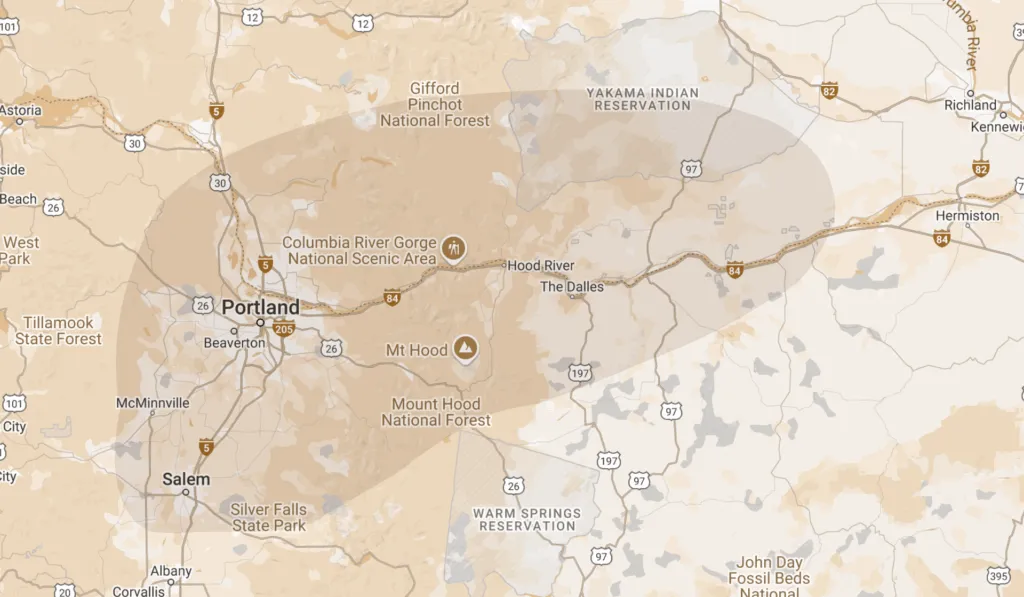
Our Service Area Map of Sky Heating service coverage from Portland through the Columbia River Gorge to The Dalles and surrounding communities

Portland, The Dalles, and communities across North Oregon and Southwest Washington. See every city we serve