



Posted in HVAC
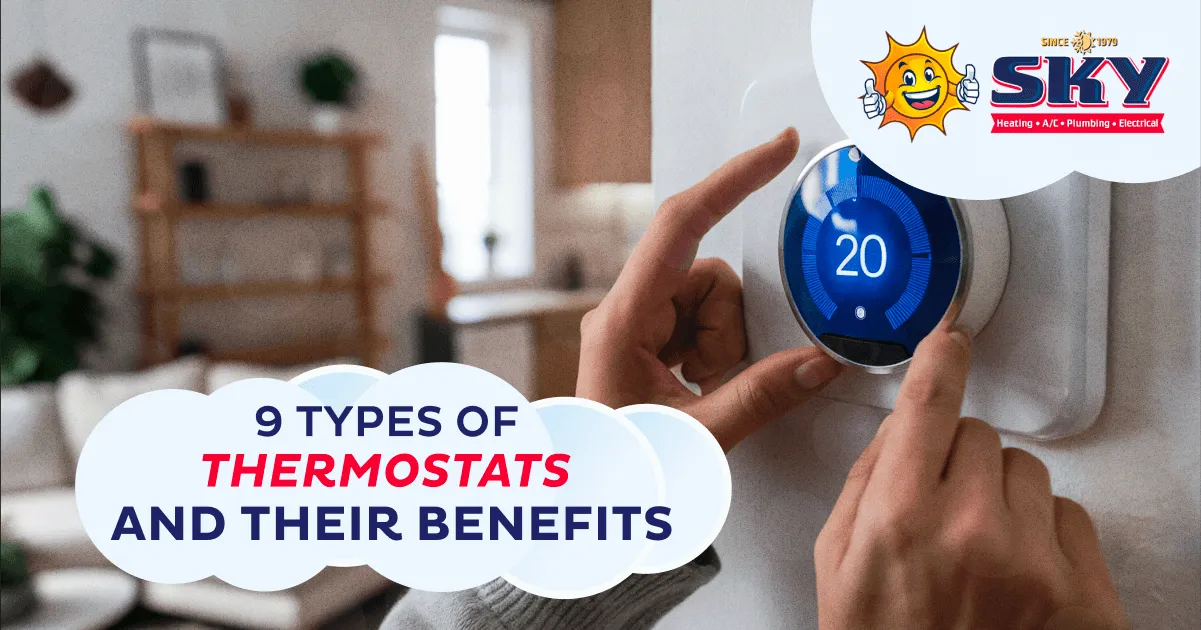
Thermostat installation is an important part of setting up your HVAC system; the type of thermostat chosen can impact your comfort and the system’s efficiency. Each type has its benefits. An experienced HVAC contractor can help determine the best option so you get the most out of your home heating and cooling system.
Below, we’ll look at some of the best cost-saving thermostat replacement options.
Common Types of Thermostats
- Manual Thermostats
- Programmable Thermostats
- Wi-Fi Thermostats
- Smart Thermostats
- Stage 1 Thermostats
- Stage 2 Thermostats
- Direct Line Voltage Thermostats
- Low-Voltage Thermostats
- Zoned Thermostats
1. Manual Thermostats
A manual thermostat is the simplest type. Most often found in older homes, it includes buttons on the front panel to adjust settings. Analog units have switches or dials, while digital models feature screens that display temperature readings. While precision is limited and a manual thermostat can’t be programmed to save energy, it does have the following benefits:
- Minimal power requirements.
- Simple to operate.
- Low purchase/installation costs.
2. Programmable Thermostats
If you prefer a specific temperature at certain times of the day, a programmable thermostat can save on your energy bill. It’s a digital device that saves your programmed settings. You can set the temperature to a certain level when you’re at work or on days of the week. Installing a programmable thermostat costs more than a manual unit, but can have various benefits like the following:
- More precise control over indoor temperature.
- Automated temperature adjustments can save energy.
- Easy to switch between your AC and heating system.
Different types of thermostats are available with programmability. For example, are available, 5-2 models can split their schedule between weekdays and weekends, while 5-1-1 models let you create separate schedules for weekdays, Saturdays, and Sundays. Other units let you create a unique schedule for each day of the week.
3. Wi-Fi Thermostats
Aside from being programmable, a Wi-Fi thermostat has a wireless internet connection. This allows you to access it remotely, whether from somewhere in your home or while you’re at work or on vacation. Some models feature a touchscreen display to further increase usability. Others can show usage data or display the latest weather conditions or forecasts. A standard Wi-Fi thermostat adjusts the temperature based on the settings you choose, but it does offer the following advantages:
- Can be controlled and monitored via your smartphone.
- Use of voice assistants to adjust the temperature.
- Ability to track energy usage, depending on the model.
4. Smart Thermostats
Smart thermostats are the most advanced on the market and can learn your heating and cooling schedule. While it can be programmed, the thermostat can recognize patterns based on how you use your HVAC system and adapt accordingly. Some models have a motion sensor. This enables the thermostat to detect when someone is present or when they leave, and then change the temperature based on the sensor’s feedback. Many types also have touchscreen displays and Wi-Fi capabilities.
Here are some other benefits of installing smart thermostats:
- Advanced scheduling and customizable settings.
- Integration with home automation systems.
- Can monitor your HVAC system for potential problems.
Types of Thermostats Based on Electrical Performance
A major consideration with thermostat installation is how the unit is wired to your HVAC system (which is why you may need an electrical service provider’s help). Removing the cover reveals the types of wires and connections the device has. They are typically identified with unique letter and number combinations and generally include one of the following designs:
5. Stage 1 Thermostats
These have a single wire for heating that inserts via the W or WI connector and a wire for cooling that inserts in the Y or Y1 connector.
6. Stage 2 Thermostats
Multiple wires for heating and cooling are contained in a Stage 2 thermostat. Terminals labeled “W” are typically for heating wires. Those labeled “Y” are usually for cooling wires, while there are also conductors for the Y1 and Y2 terminals.
7. Direct Line Voltage Thermostats
Used for HVAC systems requiring direct electrical power, such as baseboards or wall heaters, direct line voltage units often have two thick wires (sometimes four) like ones that connect to an outlet. A direct line voltage thermostat may also have a “caution high voltage” label or other warning.
8. Low-Voltage Thermostats
Central ACs, furnaces, boilers, heat pumps, and other whole-home systems are served by low-voltage thermostats. These operate on less electricity (24 millivolts (mV)) and don’t feed power directly to the system like a line-voltage unit (and aren’t directly connected to your home wiring). They also have six wires in the back.
9. Zoned Thermostats
A high-end HVAC zoning system uses one thermostat that works with multiple temperature sensors, so it can redirect air to specific rooms. Therefore, you can control multiple zones from a single location. However, many zoning systems require multiple thermostats, each serving a different area. Regardless of the setup, consult with your HVAC contractor about what models are compatible with your heating and cooling system.
Choosing the Right Thermostat
Picking the right type of thermostat for your home can impact functionality and efficiency for many years. Therefore, you must consider the following factors before thermostat installation:
- Thermostat Type: Based on your preferences and habits, is a basic, programmable, or smart thermostat best for your home?
- Compatibility: Is the thermostat you want designed for use with your type of HVAC system?
- Features: Does the unit have all the features you need, like programmability, Wi-Fi connectivity, and compatibility with home automation systems?
- Energy Efficiency: Are there energy-saving features like occupancy sensors, adaptive learning, and usage reporting?
- Interface: Is the thermostat’s touchscreen easy to read and are the controls laid out so the device is easy to use?
- Budget: How much can you afford to spend on a thermostat and can you top your range to benefit from energy savings?
Contact Sky Heating & Air Conditioning
A thermostat controls your HVAC system by sending signals to turn your heating or cooling unit on or off. If it’s not working correctly, your comfort and safety can be affected. Let us know if your existing thermostat is inaccurate, your energy bills are high, temperatures are inconsistent, or you still have an analog device. Our technicians are trained in thermostat installation and can help you consider different types of thermostats to meet your needs. To schedule thermostat installation or replacement in Portland, OR, call (503) 563-2698 today.